

Blog
MBBR Media: The Heart of Modern Biological Wastewater Treatment Systems
Introduction
As wastewater treatment requirements become more stringent worldwide, treatment technologies must provide higher efficiency, operational flexibility, and lower operating costs. One of the most widely adopted biological treatment technologies today is the Moving Bed Biofilm Reactor (MBBR) system.
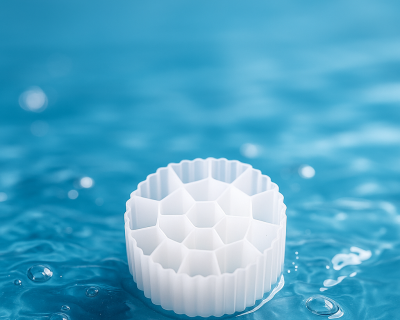
At the center of every successful MBBR process lies the MBBR media, specially designed plastic carriers that provide a large surface area for the growth of beneficial microorganisms. These microorganisms form biofilms that remove organic pollutants and nutrients from wastewater.
This article explores what MBBR media is, how it works, its advantages, and the key factors to consider when selecting the right media for a wastewater treatment plant.
What Is MBBR Media?
MBBR media consists of small plastic carriers that move freely within biological treatment tanks. These carriers are typically manufactured from high-density polyethylene (HDPE) or polypropylene (PP) and are engineered to maximize protected surface area for biofilm growth.
Unlike conventional activated sludge systems, where microorganisms remain suspended in water, MBBR technology allows bacteria to attach to the media surface and develop stable biofilms.
As wastewater flows through the reactor and aeration or mixing keeps the carriers in motion, microorganisms continuously degrade pollutants while remaining protected within the carrier structure.
How Does MBBR Media Work?
The principle behind MBBR technology is simple yet highly effective.
The media carriers provide a large surface area where microorganisms establish biofilms. As wastewater passes through the reactor:
- Organic matter comes into contact with the biofilm.
- Microorganisms consume biodegradable pollutants.
- Oxygen supplied through aeration supports biological activity.
- Excess biomass naturally sloughs off and is removed in downstream clarification processes.
- New biofilm continuously develops, maintaining stable treatment performance.
This process creates a highly efficient biological environment capable of handling varying hydraulic and organic loads.
Key Characteristics of High-Quality MBBR Media
The performance of an MBBR system depends heavily on the quality of the media used.
Important characteristics include:
High Protected Surface Area
A larger protected surface area allows more microorganisms to colonize the media, increasing treatment capacity and efficiency.
Typical effective surface areas range from:
- 350 m²/m³
- 500 m²/m³
- 650 m²/m³
- 800+ m²/m³
depending on media design.
Optimal Density
The media density should be close to water density to ensure proper suspension and movement within the reactor.
Typical density:
- 0.95–0.98 g/cm³
Mechanical Durability
MBBR media must withstand continuous movement, aeration forces, and long-term operation without deformation or breakage.
UV and Chemical Resistance
For long service life, media should resist exposure to chemicals and varying environmental conditions.
Advantages of MBBR Media
Increased Treatment Capacity
Existing wastewater treatment plants can significantly increase capacity without constructing additional tanks.
Compact System Design
The high biomass concentration enables smaller reactor volumes compared to conventional biological systems.
Process Stability
Biofilms provide resistance against shock loads and fluctuations in wastewater characteristics.
Reduced Sludge Production
Compared to some conventional biological treatment methods, MBBR systems often generate lower excess sludge quantities.
Easy Retrofit of Existing Plants
Many activated sludge systems can be upgraded to MBBR technology by simply adding media and retention screens.
Applications of MBBR Media
MBBR media is widely used across various sectors:
Municipal Wastewater Treatment
- Domestic sewage treatment plants
- Municipal wastewater upgrades
- Nutrient removal systems
Industrial Wastewater Treatment
- Food and beverage industries
- Dairy plants
- Breweries
- Textile facilities
- Chemical industries
- Pharmaceutical manufacturing
Water Reuse Projects
MBBR technology is increasingly utilized in advanced treatment systems designed for water reclamation and reuse.
Factors to Consider When Selecting MBBR Media
Choosing the right media requires evaluating several parameters:
Specific Surface Area
Higher surface area generally increases treatment efficiency but should be balanced with proper hydraulic performance.
Fill Fraction
Most systems operate with media fill ratios between:
- 30%
- 70%
depending on process requirements.
Wastewater Characteristics
Organic loading, nitrogen removal requirements, and suspended solids concentrations all influence media selection.
Reactor Design
Aeration systems, mixing intensity, and tank geometry must be compatible with the selected media.
Why Media Quality Matters
Although MBBR media may appear similar from one manufacturer to another, differences in design, material quality, and production consistency can significantly impact treatment performance.
High-quality media offers:
- Better biofilm retention
- Longer operational life
- Improved oxygen transfer
- Stable long-term treatment efficiency
- Lower maintenance requirements
Investing in premium media often results in lower lifecycle costs and superior plant performance.
Conclusion
MBBR media is the foundation of modern biofilm-based wastewater treatment systems. By providing a protected environment for microbial growth, these carriers enable efficient removal of organic matter and nutrients while maintaining operational simplicity and reliability.
Whether for municipal wastewater treatment, industrial applications, or plant upgrades, selecting the right MBBR media is a critical step toward achieving long-term treatment success and regulatory compliance.
info@enkegroup.com
+90 224 251 61 62