

Blog
How Long Does MBBR Media Last? Understanding the Lifespan of Biofilm Carriers
When investing in a Moving Bed Biofilm Reactor (MBBR) system, one of the most common questions engineers and plant operators ask is:
How long does MBBR media last?
Since the biofilm carrier is the heart of the biological treatment process, its durability directly impacts system performance, maintenance costs, and return on investment.
The good news is that high-quality MBBR media manufactured from virgin HDPE can provide reliable performance for more than 20 years under normal operating conditions.
However, not all media are created equal. Material quality, manufacturing process, and reactor operating conditions all influence the service life of biofilm carriers.
Why MBBR Media Has a Long Service Life
Unlike mechanical equipment, MBBR media contains no moving parts.
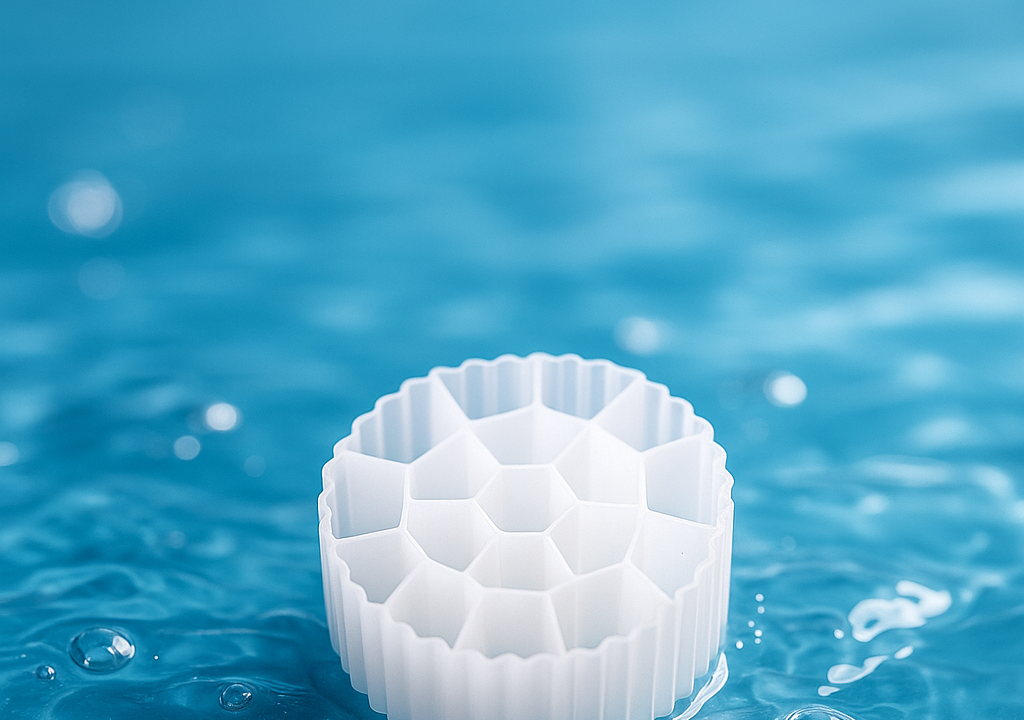
Its primary function is to provide a stable surface for microorganisms to grow while continuously moving inside the reactor.
Because the carriers are made from chemically resistant polymers, they are designed to withstand years of continuous operation without significant degradation.
The Importance of Virgin HDPE
The raw material used during manufacturing is one of the most important factors affecting durability.
High-quality MBBR media is typically produced using 100% virgin High-Density Polyethylene (HDPE).
Virgin HDPE offers several advantages:
- Excellent impact resistance
- High chemical resistance
- Stable density
- Long-term mechanical strength
- Resistance to biological degradation
Using recycled plastics may reduce manufacturing costs, but it can also lead to inconsistent material properties and shorter service life.
Factors That Affect MBBR Media Lifespan
Although MBBR media is designed for decades of operation, several conditions influence its longevity.
1. Mechanical Wear
The carriers continuously collide with each other during aeration.
Well-designed media maintain their structural integrity even after millions of impacts.
2. Aeration Intensity
Proper aeration keeps the carriers moving while preventing unnecessary mechanical stress.
Excessive air flow increases wear without improving treatment performance.
3. Wastewater Characteristics
Industrial wastewater containing abrasive particles such as sand or grit may accelerate surface wear.
Proper pretreatment significantly extends media life.
4. Manufacturing Quality
Precision injection molding ensures consistent wall thickness and structural strength.
Poor manufacturing quality may result in premature cracking or deformation.
Does Biofilm Damage the Media?
No.
The microorganisms growing on the carrier surface do not consume or degrade the plastic itself.
Instead, the biofilm naturally develops, thickens, and periodically sheds during normal operation while the carrier remains intact.
Does MBBR Media Need Replacement?
In most properly designed treatment plants, MBBR media does not require routine replacement.
Replacement is usually considered only if:
- The media has suffered physical damage.
- Significant media loss has occurred.
- The treatment capacity is being expanded.
- Additional media is required to handle higher organic loads.
Otherwise, the original media can continue operating efficiently for decades.
Signs of High-Quality MBBR Media
When selecting biofilm carriers, engineers should evaluate more than just the specific surface area.
Quality indicators include:
- Virgin HDPE material
- Consistent density
- Strong mechanical durability
- Uniform geometry
- Excellent biofilm protection
- Long operational history
Choosing high-quality media reduces maintenance costs and maximizes long-term treatment efficiency.
Conclusion
MBBR media is designed to be a long-term investment rather than a consumable product.
When manufactured from 100% virgin HDPE and operated under appropriate conditions, biofilm carriers can deliver reliable biological treatment for 20 years or more with minimal maintenance.
Selecting high-quality media at the beginning of a project helps ensure stable performance, lower lifecycle costs, and greater confidence in the wastewater treatment system.