

Blog
MBBR Media for Chemical Wastewater Treatment

Chemical plants push wastewater treatment to its limits. Variable pH, solvents, and trace toxins attack ordinary plastics fast. MBBR media for chemical wastewater treatment must survive that environment while it grows a stable biofilm. For this reason, Enke Group builds its carriers from virgin HDPE.
Standard reprocessed plastics crack and degrade under repeated chemical exposure. As a result, biofilm sheds early and treatment performance drops. Our carriers avoid that failure mode from day one.
Why Chemical Wastewater Is Hard on Standard Media
Chemical industry effluent rarely behaves like municipal sewage. It can swing in pH within hours. It may also carry solvents, oils, or trace metals. Therefore, the carrier material matters as much as the reactor design.
Cheap or recycled-content media absorb these compounds over time. Eventually, the plastic turns brittle. Cracks then let biofilm wash away during shock loads. In short, weak media cost you treatment capacity exactly when you need it most.
Virgin HDPE MBBR Media for Chemical Wastewater Treatment
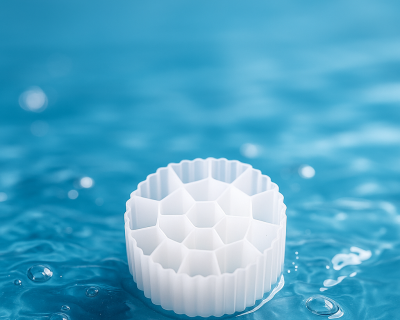
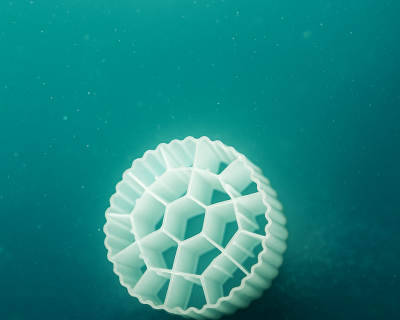
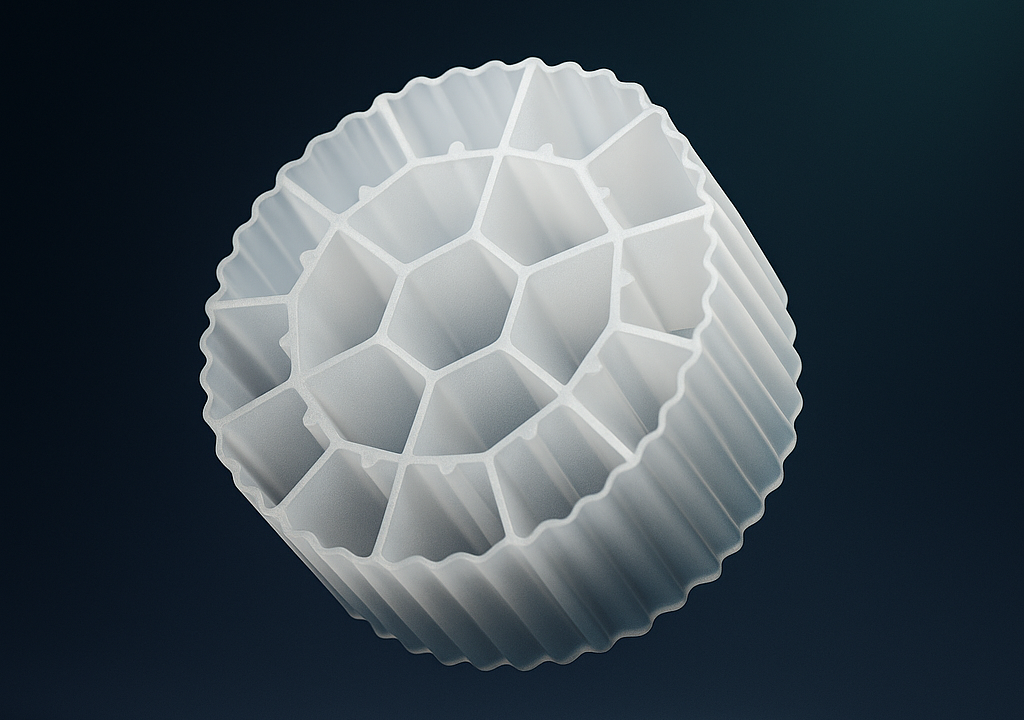
Enke Group’s MBBR media uses 100% virgin high-density polyethylene. This material resists a wide range of acids, alkalis, and solvents common in chemical processing. Additionally, virgin HDPE keeps its shape and surface texture for years of continuous use.
The carrier’s protected internal chambers shield young biofilm from turbulence and chemical shock. Consequently, your reactor recovers faster after an upset load. In fact, our guide to spotting weak MBBR carriers tells buyers to check for exactly that resilience before they purchase.
Where This Media Fits in Your Plant
Enke Group’s chemical-grade MBBR media supports treatment across several demanding sectors:
- Petrochemical and refinery wastewater
- Pharmaceutical and specialty chemical manufacturing
- Textile dyeing and finishing effluent
- Pulp, paper, and industrial process water
In every case, the same principle applies. Durable media, combined with adequate surface area, keeps nitrification and COD removal stable. This holds true even when the influent load is unpredictable. Similarly, plants with frequent shock loads benefit most from the extra chemical margin that virgin HDPE provides.
A Media Choice That Protects Your Investment
Independent industry coverage of MBBR technology backs this up. For example, HDPE carriers remain the standard choice for demanding biological treatment, largely because of their durability and surface area (see Wastewater Digest’s MBBR overview). However, not all HDPE media is equal.
Carrier geometry, wall thickness, and resin purity all affect long-term performance. Enke Group tests every batch of MBBR media before it ships. Our engineers also help you size fill ratio and chamber design around your specific chemical load. As a result, you get a carrier built for your plant, not a generic solution.
Ready to Protect Your Biological Treatment?
Chemical wastewater does not forgive weak equipment. Choose durable MBBR media that lasts through variable, corrosive loads. Contact Enke Group today to discuss virgin HDPE biofilm carriers sized for your process.