

Blog
19-Chamber MBBR Media | Benefits of Advanced Biofilm Carrier Design
Why 19-Chamber MBBR Media Improves Biological Wastewater Treatment Performance
Choosing the right MBBR media is one of the most important decisions when designing or upgrading a biological wastewater treatment plant. While specific surface area is often the first specification engineers compare, it is only one part of the equation.
The geometry of the carrier plays a critical role in biofilm development, oxygen transfer, hydraulic performance, and long-term operational stability.
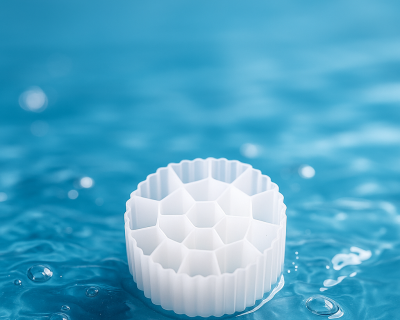
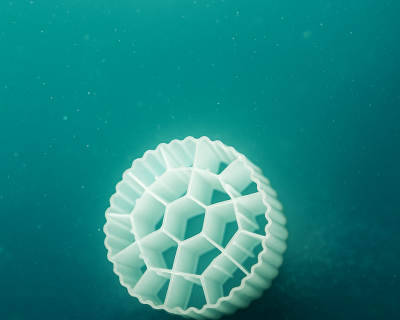
A well-designed 19-chamber MBBR media with a specific surface area of 650 m²/m³ provides an excellent balance between effective biofilm growth, mechanical durability, and hydraulic efficiency. Rather than focusing solely on maximizing theoretical surface area, this balanced design helps maintain stable biological performance under real operating conditions.
Understanding MBBR Media Design
Moving Bed Biofilm Reactor (MBBR) technology relies on millions of microorganisms growing on the protected surfaces of plastic carriers.
As wastewater flows through the reactor, these microorganisms remove organic matter and nutrients while remaining attached to the media.
The effectiveness of this process depends on much more than simply increasing the amount of available surface.
An efficient carrier should provide:
- Protected areas for biofilm growth
- Continuous water circulation
- Efficient oxygen transfer
- Stable movement inside the reactor
- High mechanical strength
- Long operational life
These characteristics work together to support reliable biological treatment.
Why the Number of Chambers Matters
The internal chamber design determines how microorganisms develop and remain attached to the carrier.
A 19-chamber geometry creates multiple protected zones where biofilm can establish itself while still allowing wastewater and oxygen to circulate freely.
This balanced internal structure offers several operational advantages.
Enhanced Biofilm Protection
Biofilm is continuously exposed to hydraulic forces inside the reactor.
A carrier with multiple protected chambers helps shield microorganisms from excessive shear stress while allowing older biofilm layers to naturally renew themselves.
This creates a healthier and more active microbial population.
Improved Water Circulation
Efficient biological treatment depends on continuous contact between wastewater, oxygen, and microorganisms.
The internal geometry of a 19-chamber carrier allows wastewater to move freely through the media, ensuring nutrients reach the biofilm while reducing stagnant zones.
Better Oxygen Distribution
Aerobic microorganisms require oxygen to efficiently degrade organic pollutants.
A balanced carrier design promotes oxygen transfer throughout the biofilm, supporting stable treatment performance even during fluctuating operating conditions.
The Importance of a Balanced Specific Surface Area
One common misconception is that the highest specific surface area always delivers the best treatment performance.
In reality, effective biological treatment depends on how much of the available surface remains biologically active during long-term operation.
A specific surface area of 650 m²/m³ represents a well-balanced design that combines generous biofilm growth capacity with efficient hydraulic performance.
Instead of maximizing theoretical values, this approach prioritizes long-term operational reliability.
Manufactured from 100% Virgin HDPE
Material quality is just as important as media geometry.
High-quality MBBR carriers manufactured from 100% virgin High-Density Polyethylene (HDPE) offer excellent resistance to chemicals, mechanical impacts, and continuous reactor operation.
Key benefits include:
- Excellent chemical resistance
- Stable density
- High impact resistance
- Long mechanical service life
- Consistent manufacturing quality
These properties help maintain media performance over many years of operation.
Stable Movement Inside the Reactor
Proper movement of biofilm carriers is essential for healthy biofilm development.
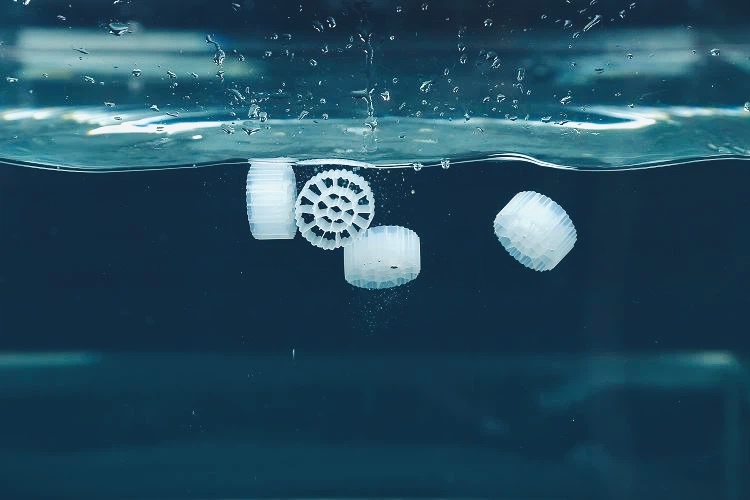
The 19-chamber design is engineered to move freely within the reactor under appropriate aeration conditions.
Continuous movement provides several advantages:
- Uniform biofilm development
- Natural biofilm renewal
- Better oxygen exposure
- Improved contact between wastewater and microorganisms
Stable carrier movement contributes directly to reliable biological treatment.
Suitable for Municipal and Industrial Wastewater
A balanced MBBR media design can be applied across a wide range of wastewater treatment applications.
Typical applications include:
- Municipal wastewater treatment
- Food and beverage industry
- Dairy wastewater
- Brewery wastewater
- Textile industry
- Chemical industry
- Pulp and paper plants
- Aquaculture systems
- Landfill leachate treatment
Its versatility makes it suitable for both new installations and plant upgrades.
Ideal for Plant Expansion Projects
Many existing wastewater treatment plants eventually reach their original design capacity.
Instead of constructing new biological reactors, many facilities choose to increase treatment capacity by adding MBBR media to existing tanks.
Because of its balanced hydraulic characteristics and effective biofilm support, 19-chamber media is well suited for retrofit projects where additional biological capacity is required within limited space.
Choosing the Right MBBR Media
Selecting MBBR media should involve evaluating several engineering parameters rather than focusing on a single specification.
Important considerations include:
- Specific surface area
- Protected biofilm area
- Carrier geometry
- Virgin HDPE material quality
- Density
- Mechanical durability
- Hydraulic performance
- Operational reliability
A balanced carrier design helps support consistent biological treatment while reducing long-term operational risks.
Conclusion
Successful biological wastewater treatment depends on much more than simply increasing the specific surface area of the carrier.
The overall geometry, protected biofilm zones, hydraulic performance, material quality, and mechanical durability all contribute to stable long-term operation.
A 19-chamber MBBR media with a balanced specific surface area of 650 m²/m³ provides an effective combination of biofilm protection, oxygen distribution, water circulation, and operational reliability for municipal and industrial wastewater treatment applications.
When selecting biofilm carriers, engineers should prioritize overall design quality rather than focusing on a single numerical specification.
Frequently Asked Questions
Why is 19-chamber MBBR media beneficial?
Its internal geometry provides protected surfaces for biofilm growth while maintaining good water circulation and oxygen transfer, supporting stable biological treatment.
Is higher specific surface area always better?
Not necessarily. Treatment performance depends on the effective use of the available surface, carrier geometry, hydraulic conditions, and biofilm stability rather than theoretical surface area alone.
Why is virgin HDPE important?
Virgin HDPE offers consistent mechanical strength, chemical resistance, and long-term durability, helping maintain reliable media performance over many years.
Where can 19-chamber MBBR media be used?
It is suitable for municipal wastewater, industrial wastewater, aquaculture, food processing, dairy, breweries, textile plants, chemical industries, and many retrofit projects.