

Blog
MBBR Media Quality: How to Spot Weak Carriers Before You Buy
MBBR media quality decides how a plant performs for the next ten years. Two carriers can look identical in a photo. However, their behaviour in the tank differs a lot. Enke Group builds carriers that hold their shape, their density, and their biofilm.
Why Carrier Quality Is Easy to Miss
Most buyers compare price per cubic metre. The datasheet then shows a similar surface area. As a result, the cheaper offer looks like the smart choice.
The difference shows up later. Media starts to float, crack, or grind down. Consequently, the plant loses biomass and the effluent slips.
Replacing a full tank of media is expensive. Moreover, the downtime costs more than the carriers themselves.
Ask any operator who has scooped floating media off a tank. For example, one bad batch can block the outlet screens within weeks. Therefore quality control belongs at the purchase stage, not the commissioning stage.
Start with the Raw Material
Enke Group uses virgin HDPE only. Recycled plastic carries fillers, pigments, and unknown batches. Therefore its density drifts from one production run to the next.
Density matters more than most people expect. Good media sits just under the density of water. In that case, gentle aeration keeps everything moving.
Heavy carriers sink into dead corners. Light carriers float on the surface instead. Either way, you lose active surface area.
Colour is another quiet warning sign. Bright or mixed colours often hide regrind material. In contrast, natural white HDPE shows exactly what you are buying.
Five Checks Before You Sign the Order
- Ask for the resin certificate — virgin HDPE should come with paperwork, not promises.
- Check the density tolerance — a tight range means a stable production process.
- Look at the wall thickness — thin walls crack under years of collision.
- Count the protected surface — only the inner surface really holds biofilm.
- Request a sample — squeeze it, and see whether it springs back.
These checks take an afternoon. In contrast, a bad batch costs you a full season.
Design Details That Protect the Biofilm
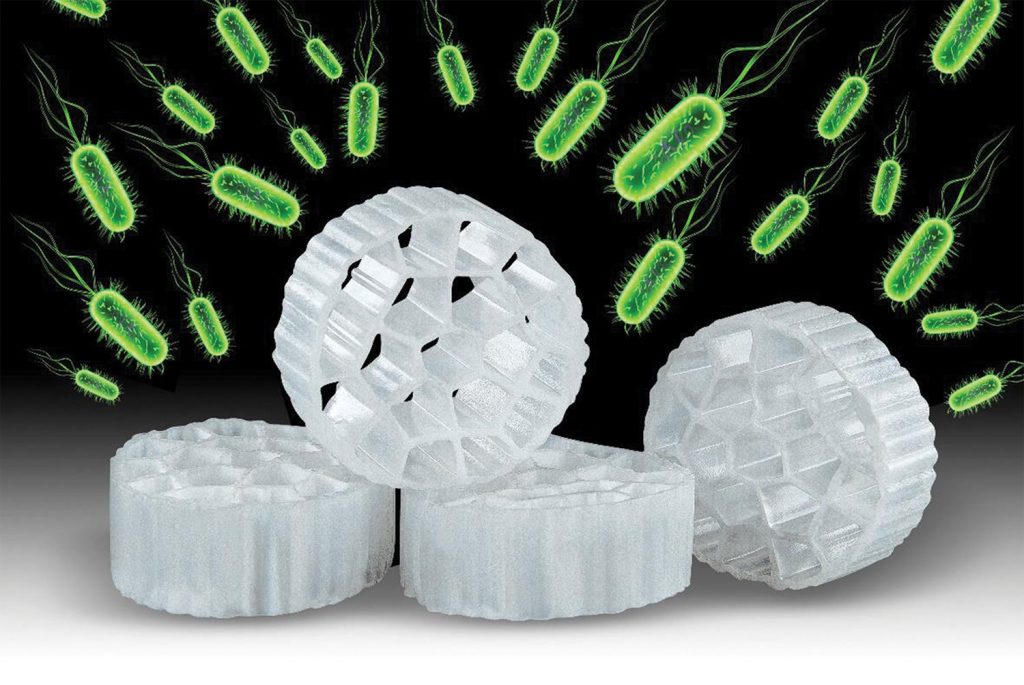
Our 19-chamber profile shields the film from abrasion. Carriers collide thousands of times each day. However, the biomass inside the chambers stays safe.
The open geometry still lets oxygen and substrate pass through. For example, a thick winter biofilm keeps feeding from the inside. In short, the design protects performance without blocking flow.
Wall thickness deserves the same attention. Enke Group keeps the walls thick enough to survive constant contact. Nevertheless, the carrier stays light enough to fluidise with normal airflow.
What Good Media Saves You
A quality carrier lasts well beyond ten years. You avoid top-ups, screen repairs, and emergency purchases. Additionally, aeration energy stays lower because fluidisation is easy.
Operators also spend less time on troubleshooting. The process simply holds its numbers through load swings. As a result, the plant meets its permit without drama.
Read our article on MBBR media lifespan for the full picture. For wider industry background, the International Water Association is a good starting point.
Talk to Enke Group
Send us your tank volume, load, and discharge limit. Then our team will quote the right media and fill ratio. Ask for a sample too, and judge MBBR media quality yourself.