

Blog
MBBR Denitrification: Remove Nitrate Reliably | Enke Group
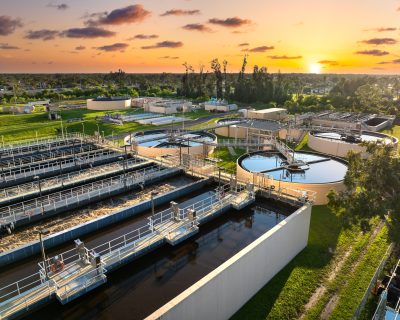
MBBR denitrification turns harmful nitrate into harmless nitrogen gas. Many plants must meet strict nitrogen limits. However, a standard aerobic tank cannot do this job. Therefore, you need an anoxic zone filled with biofilm carriers.
Enke Group supplies virgin HDPE carriers that perform well in anoxic tanks. This post explains how the process works and how to set it up.
How MBBR Denitrification Works
Denitrifying bacteria breathe nitrate instead of oxygen. They need a carbon source and a tank without dissolved oxygen. As a result, nitrate converts to nitrogen gas and leaves the water.
In an MBBR, these bacteria grow on the carriers. Mixers keep the media moving, so no air is needed. Consequently, you save aeration energy in this zone.
Pre-Denitrification or Post-Denitrification?
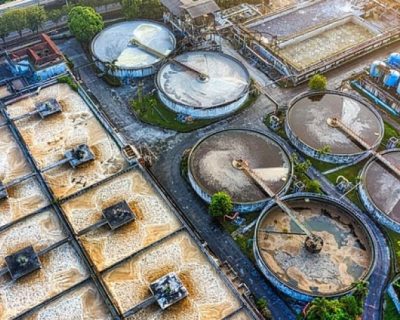
Pre-denitrification places the anoxic tank before the aerobic tank. A recycle pump returns nitrate to the front. In this setup, the incoming wastewater supplies the carbon for free.
Post-denitrification places the anoxic tank after the aerobic tank. Here, little natural carbon remains. For that reason, you add a carbon source such as methanol. However, this layout can reach very low nitrate levels.
Design Tips for Anoxic MBBR Tanks
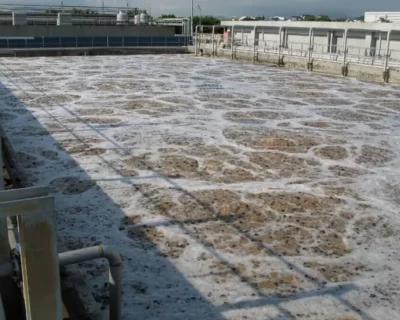
Mixing is the key. The media must move freely without adding oxygen. For example, submersible mixers work well in these tanks.
Next, choose a fill ratio that gives enough surface area. Anoxic tanks often use 30 to 50 percent fill. Then, check the carbon supply, because bacteria stall without it. Finally, keep the dissolved oxygen near zero.
Why Enke Group Carriers Suit Denitrification
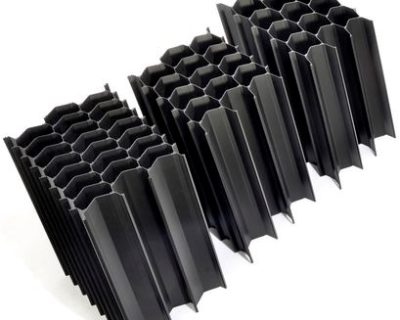
Our carriers use virgin HDPE, so they stay strong in mixed tanks. Their protected chambers shelter a thick biofilm. In addition, the high surface area supports more bacteria per cubic meter.
- Virgin HDPE: resists wear from constant mixing.
- Protected chambers: keep the biofilm safe from shear.
- High surface area: packs more bacteria into a small tank.
- Compact footprint: often adds nitrogen removal without a new basin.
To plan the full nitrogen line, read our guide on MBBR ammonia removal and nitrification. You can also read this overview of denitrification.
Talk to Enke Group
Need to cut nitrogen in your effluent? Our engineers can size an anoxic MBBR for your plant. Contact Enke Group today for a consultation. We will help you reach your discharge limits with confidence.