

Blog

Fine Bubble Diffusers: How to Cut Aeration Energy Costs
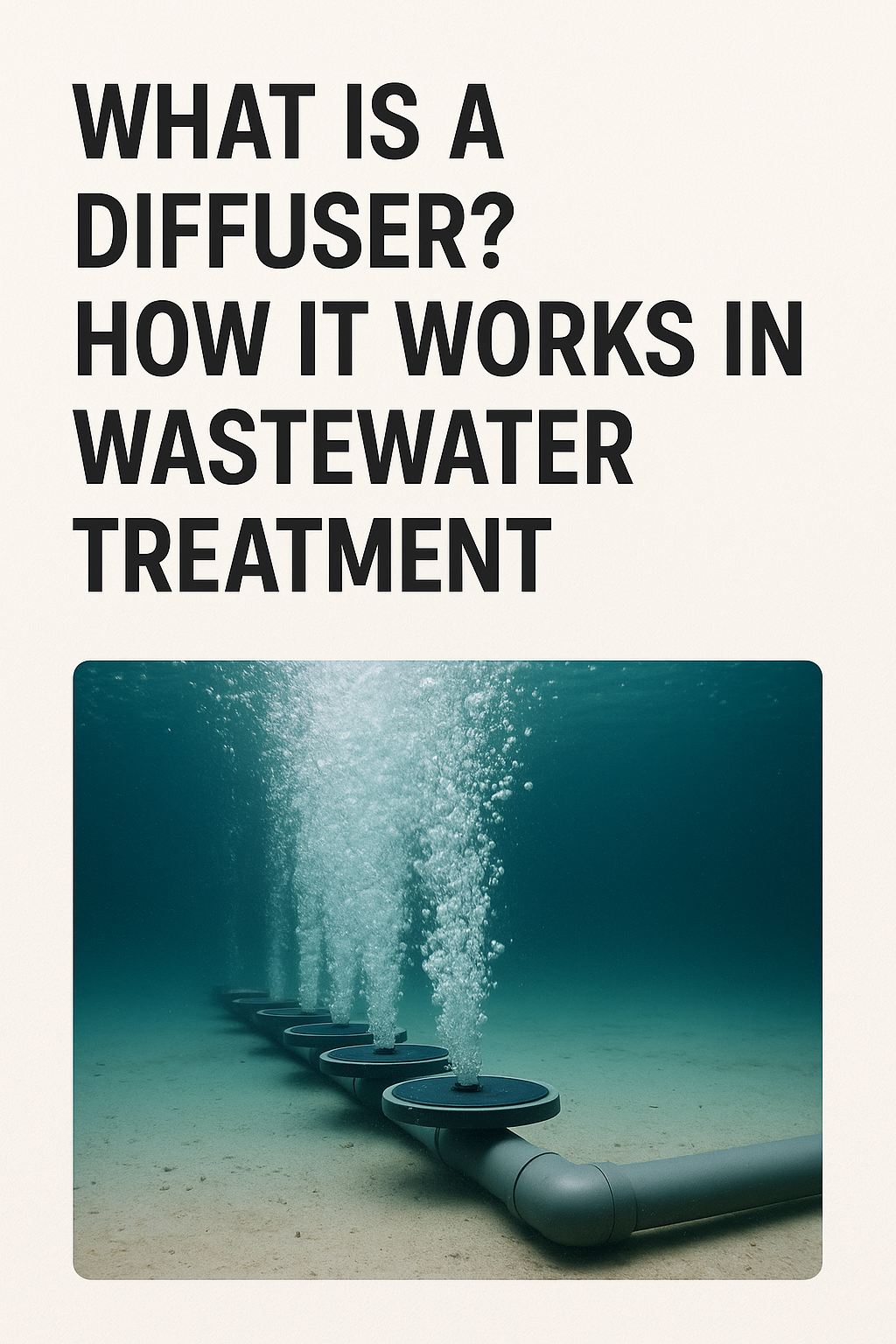
Fine bubble diffusers decide how much energy your aeration tank burns every day. Aeration often takes half of a plant’s power bill. Therefore small gains in oxygen transfer add up fast. Enke Group builds diffusers that hold that efficiency for years.
Why Bubble Size Changes Everything
Oxygen moves from the bubble into the water across its surface. Small bubbles carry far more surface per cubic metre of air. As a result, fine bubbles transfer much more oxygen.
Coarse bubbles rise quickly and escape. Fine bubbles rise slowly instead. Consequently, the water has more time to absorb the oxygen.
The difference is not small. For example, fine bubble systems often double the transfer rate of coarse systems. In practice, that means a smaller blower and a lower bill.
Tank depth also plays a role. Deeper water gives the bubble a longer path. Therefore deep tanks reward fine bubbles even more.
What Makes a Good Membrane
The membrane does the real work. Enke Group uses EPDM compounds designed for wastewater. Cheap membranes harden within a season. However, a good compound stays flexible for years.
Slit pattern matters just as much. Our slits open evenly across the whole surface. Therefore the air spreads instead of blasting through a few holes.
Uneven slits create dead zones and hot spots. Moreover, they raise back pressure and waste blower power.
Check the holder as well. Enke Group uses reinforced bases that will not warp under heat. Nevertheless, the membrane stays easy to replace on site.
Fouling, Back Pressure, and Real Costs
Every diffuser fouls over time. Grease, scale, and biofilm build up on the surface. As a result, back pressure climbs and the blower works harder.
A well-made membrane resists this build-up. In addition, its surface releases deposits during normal flexing.
Operators still need a cleaning plan. For instance, a yearly acid wash keeps performance close to new.
Disc or Tube? A Quick Guide
- Disc diffusers — best for shallow to medium tanks, and easy to service.
- Tube diffusers — more surface per unit, good for narrow basins.
- Grid layout — full-floor coverage gives the most even oxygen profile.
- Retrofit kits — new membranes fit most existing holders.
- Stainless headers — 304 or 316 piping survives aggressive effluent.
Enke Group supplies both types from stock. Our team also sizes the grid for your tank depth and load.
What You Gain
Plants that switch to fine bubble aeration report clear savings. Blower hours drop, and dissolved oxygen becomes steadier. Additionally, the process handles peak loads without panic.
Maintenance costs drop as well. Fewer blower hours mean fewer bearings and filters. As a result, the whole aeration line lasts longer.
New membranes pay for themselves through energy alone. In short, better aeration is the cheapest upgrade in most plants.
Read our guide on how a diffuser works for the basics. For wider energy context, see the US EPA guidance on energy efficiency for water utilities.
Get a Quote from Enke Group
Send us your tank depth, air flow, and current diffuser type. Then we will propose a layout and a price. Ask about a sample membrane too, and check the quality yourself.