

Blog
MBBR Media for Food & Beverage | Enke Group

Food and beverage plants produce some of the toughest wastewater in industry. Dairy, beverage bottling, and meat processing all release high-strength organic loads. MBBR media for food and beverage wastewater treatment gives these plants a compact, reliable way to handle that load. Enke Group builds this media from virgin HDPE for long-term performance. As a result, plants get steady treatment even when production volumes swing.
Why Food and Beverage Wastewater Is Different
High-strength wastewater carries far more organic matter than typical municipal flow. As a result, standard treatment systems often struggle to keep up. Sudden production shifts also send BOD spikes through the system. For example, a bottling line running a syrup batch can double organic load within an hour. Therefore, food and beverage plants need media that responds fast and stays stable under stress. Fat, oil, and grease content adds further strain on standard biological systems. Odor complaints and permit violations often follow when treatment falls behind. A well-sized MBBR system helps plants avoid both problems.
Built From Virgin HDPE for Long-Term Reliability
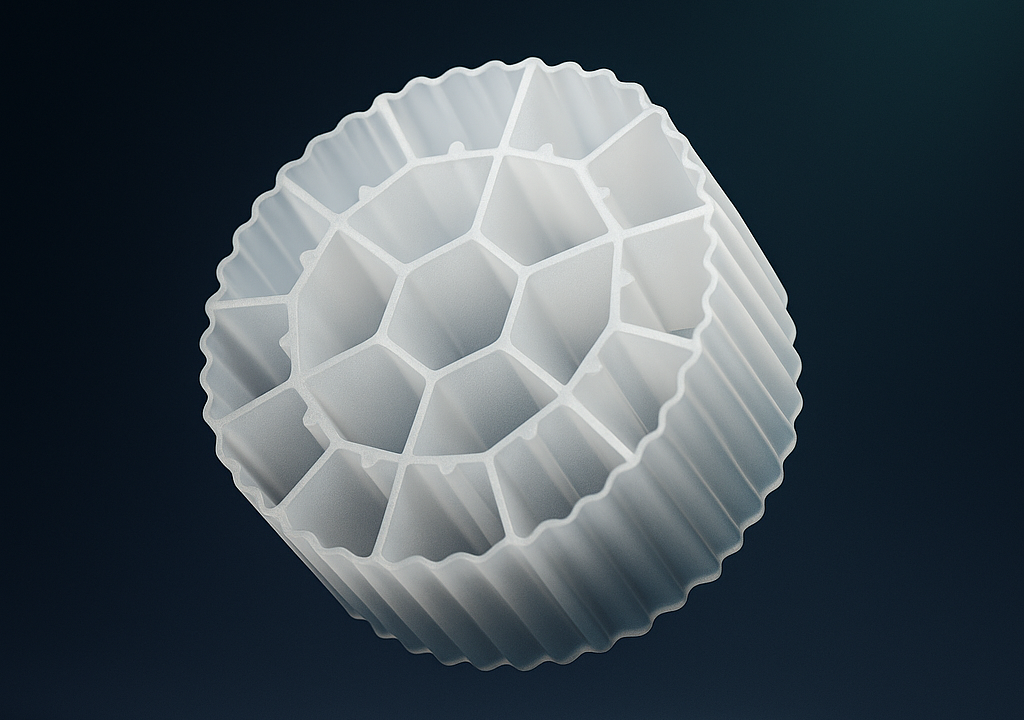
Enke Group manufactures its MBBR media from 100% virgin HDPE, not recycled plastic. This choice matters in food and beverage settings, where fats, oils, and cleaning chemicals degrade weaker materials fast. Virgin HDPE resists cracking and keeps its shape under constant biofilm growth and washdown cycles. In addition, the chamber design protects the internal surface area from clogging, even with high solids content. As a result, the biofilm stays active and nitrification stays consistent. This durability also means fewer media replacements over the life of the plant.
Where MBBR Media for Food and Beverage Plants Performs Best
Food and beverage producers use Enke Group’s MBBR media across several demanding applications. In particular, four sectors see the strongest results:
- Dairy processing — handles high-fat, high-BOD effluent from cheese and yogurt lines.
- Breweries and beverage bottling — manages sugar-heavy wash water and CIP discharge.
- Meat and poultry plants — treats protein-rich wastewater with variable flow.
- Edible oil and snack food production — copes with oily, high-solids streams.
Each application relies on the same core design. High surface area, strong biofilm attachment, and fouling resistance all work together. Consequently, plants gain stable treatment even when production schedules change often. Operators also report easier maintenance since the media resists tangling and clumping.
Choosing the Right Fill Ratio and Media Type
Getting fill ratio right matters when selecting MBBR media for food and beverage applications. Similarly, tank geometry and existing aeration capacity shape the right choice. Enke Group’s team reviews influent BOD, flow variability, and available tank volume before recommending a fill ratio. This step prevents under-sizing, a common cause of poor nitrification. It also avoids over-sizing, which wastes budget without adding real treatment value. For a deeper look at sizing, see our MBBR media selection guide.
Regulatory pressure adds another reason to size systems correctly. According to the EPA’s effluent guidelines overview, industrial wastewater discharge often faces sector-specific standards. Consequently, food and beverage plants benefit from treatment that consistently meets those limits. Proper sizing today also reduces the risk of costly upgrades later.
Talk to Enke Group About Your Plant
Enke Group designs MBBR media specifically for demanding industrial wastewater, including food and beverage applications. Our virgin HDPE media, proven chamber design, and engineering support help plants meet discharge limits reliably. In short, the right media choice protects both compliance and budget over time. Reach out to our team to review your current system and flow data. Contact Enke Group today to discuss the right MBBR media for your facility.